Scenery
Snap out of it!
12/05/12 08:20
For a full year, I regularly ran trains on my new layout,
But did very little in the way of new construction or revisions.

When I switched from HO scale to On30, I figured I was leaving the world of Ready-To-Run, prebuilt models behind. I assumed a far simpler O scale layout would be marginally interesting to operate, and more modeling time would be taken up with scratchbuilding. But once all the track was in and I had a reasonable inventory of locomotives and rolling stock, I was completely caught by surprise. Small locomotives pulling short trains around a winding industrial line captivated me beyond all expectations. All I wanted to do was run trains. I suddenly found myself in the segment of model railroaders who never get around to building scenery on their layouts.

I needed a convicting experience that would make me believe that the full potential of the layout would only be reached if I continued building, and modeling time would be better spent doing something constructive. On a mild January day I drove to Nelson County and hiked to a few old quarry sites. I came away feeling that my layout could be greatly improved by representing some of these beautiful scenes.

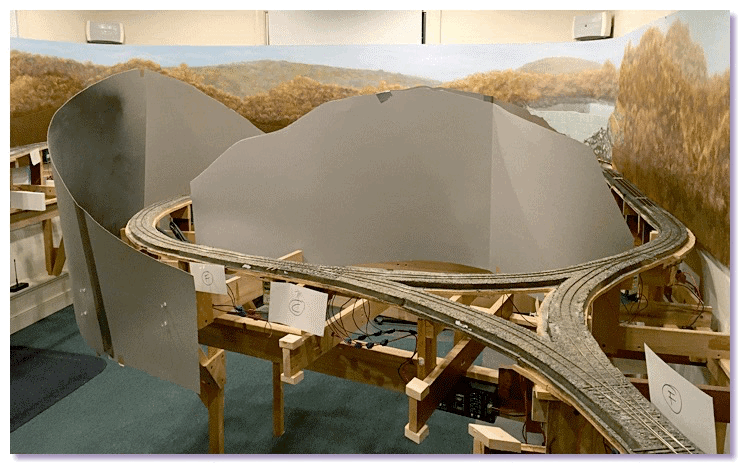
I decided to start scenery construction in the far corner of the layout. No towns, mills or quarries were planned for this area, so I thought it would be a good place to experiment and determine how I would build scenery.

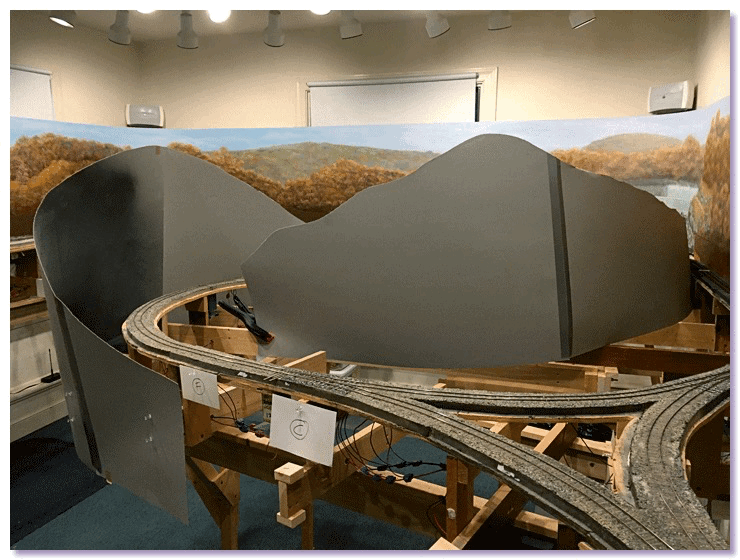
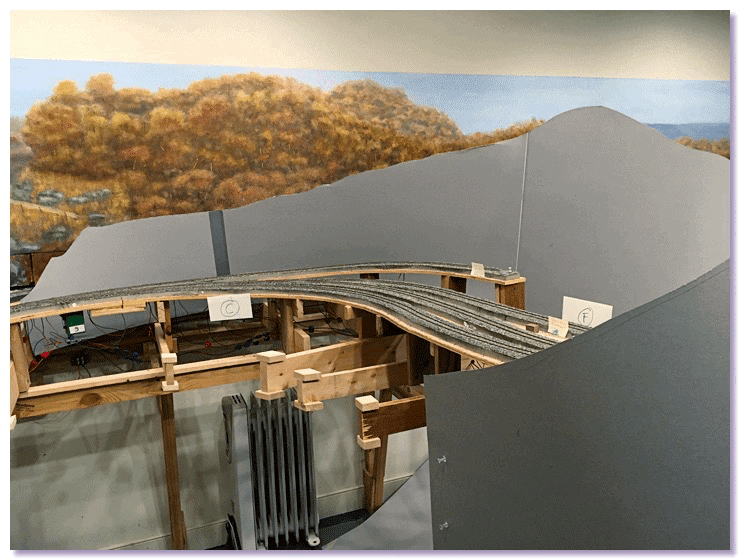
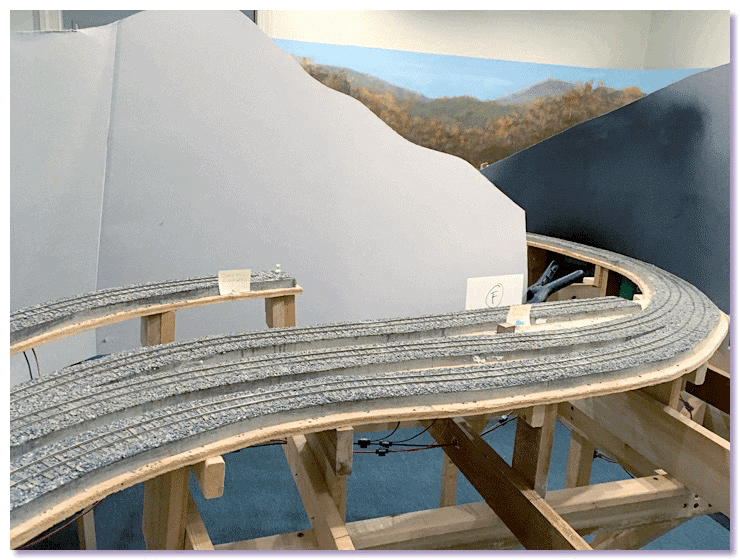
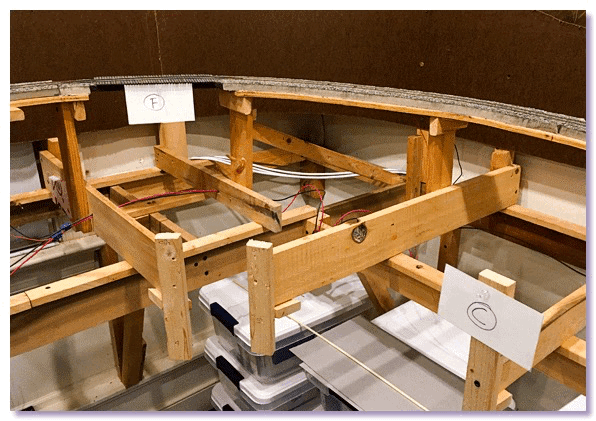
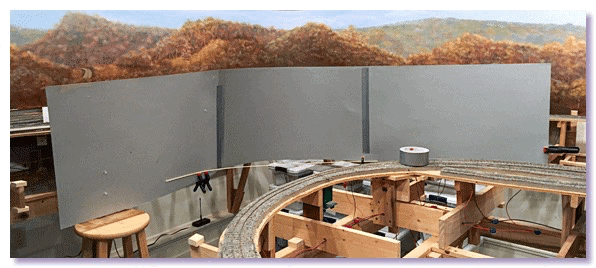
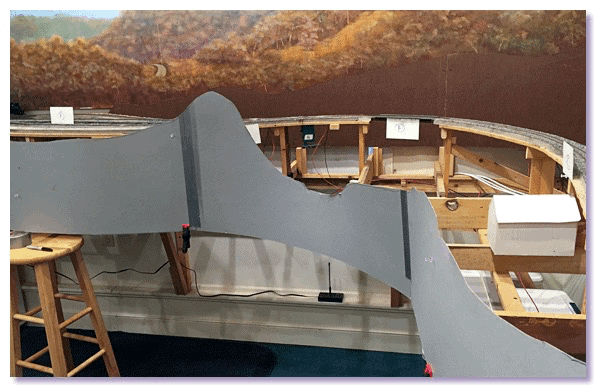
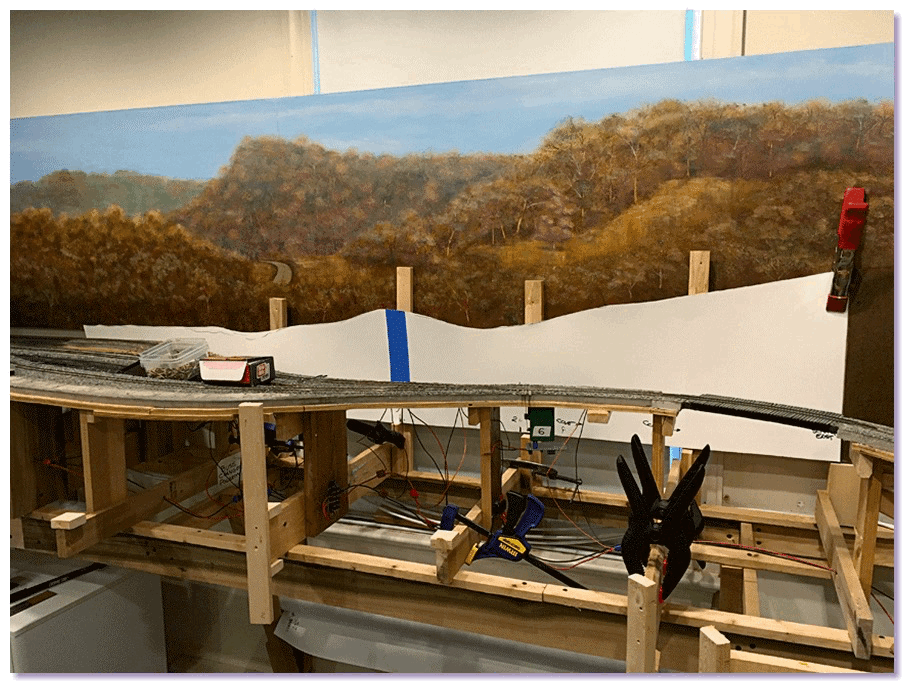
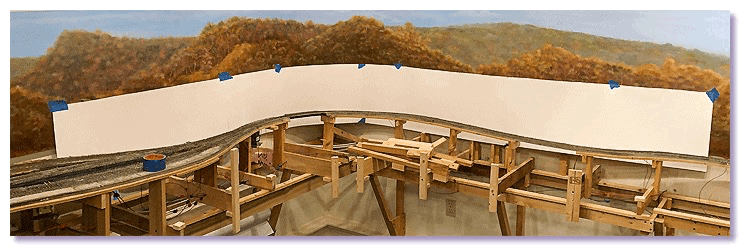
I don’t want the scenery to be attached directly to the backdrop, so I developed these posts to support a Masonite profile board immediately in front of, but not touching, the backdrop.

The posts are attached to the same benchwork joists that support the roadbed risers. 2x2 blocks against the wall maintain a gap that will put the back profile board about an inch in front of the backdrop. The height of the posts indicate the planned height of the back profile board at that location. 1x2 blocks on the front of each post at the bottom will support the back profile board.
But did very little in the way of new construction or revisions.

When I switched from HO scale to On30, I figured I was leaving the world of Ready-To-Run, prebuilt models behind. I assumed a far simpler O scale layout would be marginally interesting to operate, and more modeling time would be taken up with scratchbuilding. But once all the track was in and I had a reasonable inventory of locomotives and rolling stock, I was completely caught by surprise. Small locomotives pulling short trains around a winding industrial line captivated me beyond all expectations. All I wanted to do was run trains. I suddenly found myself in the segment of model railroaders who never get around to building scenery on their layouts.

I needed a convicting experience that would make me believe that the full potential of the layout would only be reached if I continued building, and modeling time would be better spent doing something constructive. On a mild January day I drove to Nelson County and hiked to a few old quarry sites. I came away feeling that my layout could be greatly improved by representing some of these beautiful scenes.

I decided to start scenery construction in the far corner of the layout. No towns, mills or quarries were planned for this area, so I thought it would be a good place to experiment and determine how I would build scenery.

I don’t want the scenery to be attached directly to the backdrop, so I developed these posts to support a Masonite profile board immediately in front of, but not touching, the backdrop.

The posts are attached to the same benchwork joists that support the roadbed risers. 2x2 blocks against the wall maintain a gap that will put the back profile board about an inch in front of the backdrop. The height of the posts indicate the planned height of the back profile board at that location. 1x2 blocks on the front of each post at the bottom will support the back profile board.
Cow Field Module - 1
06/04/12 14:06
Once my mill module had progressed to a presentable state, I turned my attention to work on the cow field module.

This module is only one foot wide, compared to the two foot wide mill module. The theme for this module is a simple rural setting for the train to run along a rocky hillside. I started the scenery years ago ... a “once over” of rock castings, coarse turf, stag moss, and a grout dirt road. It was high time to move beyond this point.

Small trees and underbrush were constructed from bits of Super Trees. Foliage was applied with spray adhesive. Bright green foliage and turf were added to bring the color range of my module scenery more in line with the colors used by other members of the JRD On30 Module Group.

Super Tree material was added to a sagebrush armature to create one large tree for the hillside above the tracks and cow field.

Even with the addition of a lot of foliage, my module still looked empty. I decided it needed a few points of interest to help compose the scene. A diecast tractor, some Woodland Scenic cows and a figure out of a gandy dancer set were chosen to populate the cow field. They all received a heavy spray of Dullcote lacquer and a rottenstone bath.

This module is only one foot wide, compared to the two foot wide mill module. The theme for this module is a simple rural setting for the train to run along a rocky hillside. I started the scenery years ago ... a “once over” of rock castings, coarse turf, stag moss, and a grout dirt road. It was high time to move beyond this point.

Small trees and underbrush were constructed from bits of Super Trees. Foliage was applied with spray adhesive. Bright green foliage and turf were added to bring the color range of my module scenery more in line with the colors used by other members of the JRD On30 Module Group.

Super Tree material was added to a sagebrush armature to create one large tree for the hillside above the tracks and cow field.

Even with the addition of a lot of foliage, my module still looked empty. I decided it needed a few points of interest to help compose the scene. A diecast tractor, some Woodland Scenic cows and a figure out of a gandy dancer set were chosen to populate the cow field. They all received a heavy spray of Dullcote lacquer and a rottenstone bath.
Winwood Backdrop - 2
15/11/10 07:51
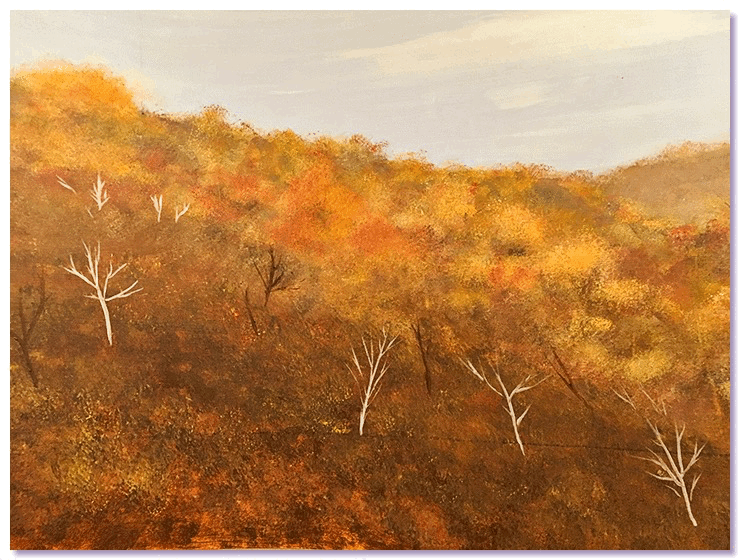
Once the basic color and shadow areas had been applied and allowed to dry, I wet a Q-tip with alcohol and randomly rubbed through the paint.

The alcohol picked up the acrylic paint down to the protective isolation layer. The resultant light streak looks very much like a tree trunk, complete with faint bark detail. Very few tree trunks are required. I also added a few dark tree trunks and some branch detail with a fine brush.

That Winwood is in the foothills of the Blue Ridge Mountains is supposed to be implied by a distant ridge above the treetops on the right end of the backdrop. The distant ridge also helps define how far away the water tower is.

At the suggestion of a friend, I decided to add a water tower to the backdrop. I rendered it with colored pencils and watercolor markers. It is fairly translucent so the backdrop coloring shows through, which helps make it look somewhat distant. The water tank provides a point for the eye to focus on, and it helps define Winwood as an old industrial site.

Once the shadowbox for Winwood was roughed in, I was able to test fit the backdrop in place, and trim the height to fit.

The alcohol picked up the acrylic paint down to the protective isolation layer. The resultant light streak looks very much like a tree trunk, complete with faint bark detail. Very few tree trunks are required. I also added a few dark tree trunks and some branch detail with a fine brush.

That Winwood is in the foothills of the Blue Ridge Mountains is supposed to be implied by a distant ridge above the treetops on the right end of the backdrop. The distant ridge also helps define how far away the water tower is.

At the suggestion of a friend, I decided to add a water tower to the backdrop. I rendered it with colored pencils and watercolor markers. It is fairly translucent so the backdrop coloring shows through, which helps make it look somewhat distant. The water tank provides a point for the eye to focus on, and it helps define Winwood as an old industrial site.

Once the shadowbox for Winwood was roughed in, I was able to test fit the backdrop in place, and trim the height to fit.
Winwood Backdrop - 1
12/08/10 11:12
As the first step of scenery, and to bring Winwood up to the level of completion of the rest of the layout, I designed a very simple backdrop.

The backdrop is 18 inches tall, and about 11 feet wide, to cover the 8 foot length of the shelf, turn in the back corners, and come out to the front edge of the shelf at either end. The scene is simple low lying ridges and hills along the James River in Nelson County. At this point the James River runs from south to north, and is toward the right of the scene. The river itself will not be on the backdrop or modeled, since it would be several hundred yards out of the scene.
The town site of Winwood will be marked by an old water tower. The water tower idea came from Bill Davis, and it is a good way to imply the scene’s industrial heritage. I decided not to try to build a water tower, but to just paint it in the medium distance on the backdrop itself.

The backdrop is painted on a 2 by 12 foot strip of cheap vinyl flooring. I chose vinyl because I want sharp radius coves in the corners. I chose this particular flooring due to its smooth, even backing. I unrolled the flooring face down in my shop, and applied 2 coats of acrylic primer with a roller to the back.

Once the primer was dry, I moved the backdrop to my workbench and sketched out the rough design. I had to keep in mind where the coves would be, and that quite a bit of the top would be trimmed off when the backdrop was ready to be installed.
I mixed up large amounts of 2 colors of paint: sky blue and a pale warm yellow. These colors were used to block in the areas that would be sky and hills. Once dry, I painted on a coat of clear matte medium as an isolation coat to protect the base paint.

Once the matte medium was dry, I began to apply thin layers of green and brown paint, wiping and daubing it on the backdrop with sea sponges. Color was built up in thin layers of rough texture, allowing the paint to dry between each application.

As the color and texture built up, I concentrated on adding darker tones to the areas that would become shadows under individual trees.

The backdrop is 18 inches tall, and about 11 feet wide, to cover the 8 foot length of the shelf, turn in the back corners, and come out to the front edge of the shelf at either end. The scene is simple low lying ridges and hills along the James River in Nelson County. At this point the James River runs from south to north, and is toward the right of the scene. The river itself will not be on the backdrop or modeled, since it would be several hundred yards out of the scene.
The town site of Winwood will be marked by an old water tower. The water tower idea came from Bill Davis, and it is a good way to imply the scene’s industrial heritage. I decided not to try to build a water tower, but to just paint it in the medium distance on the backdrop itself.

The backdrop is painted on a 2 by 12 foot strip of cheap vinyl flooring. I chose vinyl because I want sharp radius coves in the corners. I chose this particular flooring due to its smooth, even backing. I unrolled the flooring face down in my shop, and applied 2 coats of acrylic primer with a roller to the back.

Once the primer was dry, I moved the backdrop to my workbench and sketched out the rough design. I had to keep in mind where the coves would be, and that quite a bit of the top would be trimmed off when the backdrop was ready to be installed.
I mixed up large amounts of 2 colors of paint: sky blue and a pale warm yellow. These colors were used to block in the areas that would be sky and hills. Once dry, I painted on a coat of clear matte medium as an isolation coat to protect the base paint.

Once the matte medium was dry, I began to apply thin layers of green and brown paint, wiping and daubing it on the backdrop with sea sponges. Color was built up in thin layers of rough texture, allowing the paint to dry between each application.

As the color and texture built up, I concentrated on adding darker tones to the areas that would become shadows under individual trees.
Schwenk's Mill - Construction
24/10/09 08:12
The Mid-East Region Convention was fast approaching. The James River Division On30 Module Group had signed up to give its first public showing at the convention.

My Schwenk’s Mill module was far from complete, and could not possibly be finished in time. So I set about making it presentable as quickly as possible.

I had a general plan for a mill and two sheds. Two roads running diagonally across the module would connect the buildings and reduce the boxy rectangular look of the module. The roads themselves are primarily charcoal colored grout with sifted dirt and small stones added. The ground cover is mainly fine sawdust. Cherry and red oak in the sawdust make it orange/red tinted, and therefore a fair representation of Virginia red clay. Over top of the sawdust I layered on a mix of decorative moss, lichen, and Woodland Scenics foliage and turf in late summer colors. A short section of tram roadbed is handlaid code 50 rail on HO low profile ties, ballasted with crushed slate that I collected in Buckingham County.

The mill is built in three sections out of black Strathmore board and basswood bracing. The metal siding is drawing paper embossed with the pattern from a piece of corrugated styrene sheet.

The roof of the mill is drawing paper embossed with the pattern from raised seam roofing styrene sheet. The doors and windows are Grandt Line. The dust collector is an HO scale Walthers detail part. The concrete foundation of the loading end of the mill is spackling over the Strathmore board. Trim, steps, roof details, and many other items were left for later.

Ready or not, the time has come to pack up and head for Hagerstown. At the convention, Clint Hyde was kind enough to supply two small buildings that fit nicely in the vacant spaces on the module.
Even though far from finished, construction of Shwenk’s Mill has already taught me a great deal about scratchbuilding. I now know how important accurate, full sized plans are for building, and I have a more realistic idea of just how long it can take to scratchbuild a building.

My Schwenk’s Mill module was far from complete, and could not possibly be finished in time. So I set about making it presentable as quickly as possible.

I had a general plan for a mill and two sheds. Two roads running diagonally across the module would connect the buildings and reduce the boxy rectangular look of the module. The roads themselves are primarily charcoal colored grout with sifted dirt and small stones added. The ground cover is mainly fine sawdust. Cherry and red oak in the sawdust make it orange/red tinted, and therefore a fair representation of Virginia red clay. Over top of the sawdust I layered on a mix of decorative moss, lichen, and Woodland Scenics foliage and turf in late summer colors. A short section of tram roadbed is handlaid code 50 rail on HO low profile ties, ballasted with crushed slate that I collected in Buckingham County.

The mill is built in three sections out of black Strathmore board and basswood bracing. The metal siding is drawing paper embossed with the pattern from a piece of corrugated styrene sheet.

The roof of the mill is drawing paper embossed with the pattern from raised seam roofing styrene sheet. The doors and windows are Grandt Line. The dust collector is an HO scale Walthers detail part. The concrete foundation of the loading end of the mill is spackling over the Strathmore board. Trim, steps, roof details, and many other items were left for later.

Ready or not, the time has come to pack up and head for Hagerstown. At the convention, Clint Hyde was kind enough to supply two small buildings that fit nicely in the vacant spaces on the module.
Even though far from finished, construction of Shwenk’s Mill has already taught me a great deal about scratchbuilding. I now know how important accurate, full sized plans are for building, and I have a more realistic idea of just how long it can take to scratchbuild a building.
Callaghan's Crossing - Display
13/09/09 16:25
The second module I am building as my participation in the James River Division On30 Module Group is half-sized, which is 4 ft. long by 1 ft. wide. This module is very light and easy to transport.

Besides being set up at Module Meets, I plan to use it as a diorama for photography. For these photos, I sat the module on the benchwork of my layout to take advantage of the backdrop.

There is room on the module for a short train to be displayed, which will allow me to take it to model railroad gatherings and use it as a display diorama for my models.

Building modules is a great way to gain experience at model railroad construction quickly. Regular work sessions allow the members of the module group to share techniques and troubleshoot one another’s problems.

Besides being set up at Module Meets, I plan to use it as a diorama for photography. For these photos, I sat the module on the benchwork of my layout to take advantage of the backdrop.

There is room on the module for a short train to be displayed, which will allow me to take it to model railroad gatherings and use it as a display diorama for my models.

Building modules is a great way to gain experience at model railroad construction quickly. Regular work sessions allow the members of the module group to share techniques and troubleshoot one another’s problems.
End the Year Painting
28/12/07 13:21
In one gigantic push, I sent Christmas cards, bought and wrapped presents, and picked up tons of leaves in my yard. With the Holidays winding down, I am closing out 2007 by finishing up the backdrop painting I started 3 months ago.

The west wall of the backdrop has many more trees painted on it now. I assume that the view of much of the new painting will be blocked by 3-D scenery once construction has advanced to that stage.

There will be derricks, shop buildings, and stone piles in front of the backdrop at Cove Quarry.

There will be a hill with a derrick on it here at Meridian Quarry.

The west wall of the backdrop has many more trees painted on it now. I assume that the view of much of the new painting will be blocked by 3-D scenery once construction has advanced to that stage.

There will be derricks, shop buildings, and stone piles in front of the backdrop at Cove Quarry.

There will be a hill with a derrick on it here at Meridian Quarry.
New Road and Treeline
29/11/07 13:07

I thought about putting a road on a high shelf along the edge of the quarry ... maybe to help imply that the scene goes back into the distance, maybe to distract the full focus of this part of the backdrop from just being on the quarry itself. The widely spaced rotten fenceposts would do little to keep a truck loaded with stone from going over the edge. They are mainly there to imply that the road continues around the corner out of sight.

I started working in trees in front of and below the existing treeline, which will give me more flexibility as to how high the 3-D scenery will be.

Broom straw and other weeds have grown on the embankment along the road

Working trunk and limb detail into the new trees.
Finishing Cove Quarry
19/11/07 11:21
Some washes of thin white and chalky neutrals softened details and "knocked back" the quarry into the background

Sharp edged, contrasty hightlights and shadows on the rock piles along the bottom of the scene bring them forward so they appear to be closer.

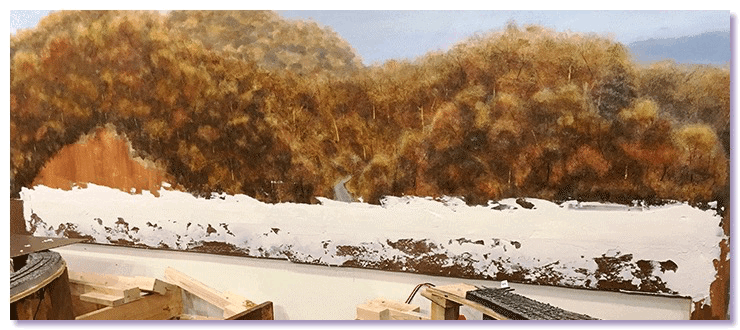
Since there is no longer a hidden track running under the scenery along the wall, I think I will lower the profile of the scenery where it meets the backdrop. This will require the trees on the backdrop to extend further down. I have painted in an isolation coat of light tan where the new trees will be.

Sharp edged, contrasty hightlights and shadows on the rock piles along the bottom of the scene bring them forward so they appear to be closer.

Since there is no longer a hidden track running under the scenery along the wall, I think I will lower the profile of the scenery where it meets the backdrop. This will require the trees on the backdrop to extend further down. I have painted in an isolation coat of light tan where the new trees will be.
Cove Quarry taking shape
10/11/07 06:56
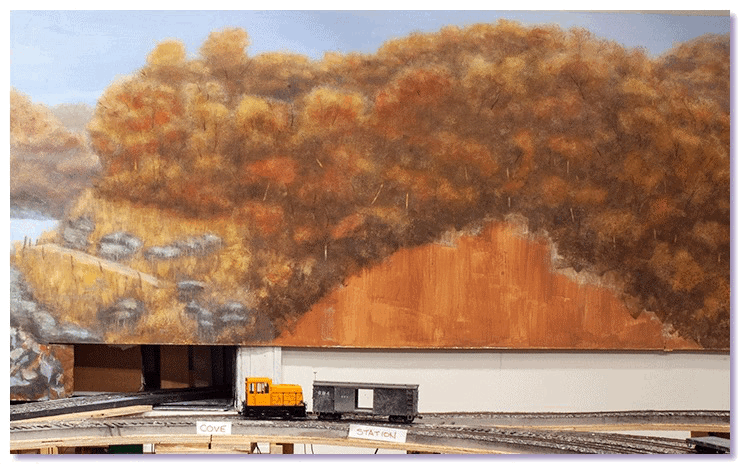
I painted in a distant hilltop and the trees around the quarry. Then I printed out photographs I have taken of abandoned soapstone quarries to use as color and value references for painting the quarry. I wanted to show a support bulkhead of stone in the quarry. Soapstone quarries would often have these "walls" of stone left in place to support the walls of the quarry as it was cut deeper.

Since this quarry exists entirely on the backdrop, there will not be an actual "hole" that you can look down into, so I am painting a long, low stone pile across the front of the scene to prevent being able to see down into the quarry.

I added some fissure lines in the rock face to illustrate the "grain" of the stone.

Since this quarry exists entirely on the backdrop, there will not be an actual "hole" that you can look down into, so I am painting a long, low stone pile across the front of the scene to prevent being able to see down into the quarry.

I added some fissure lines in the rock face to illustrate the "grain" of the stone.
Cove Quarry roughed in
12/10/07 13:23

I painted a base coat on the backdrop for Cove Quarry. The tree base is a straw yellow, and the quarry base is a dirty gray green. Once the base coat was dry, I applied a clear coat of acrylic gel medium. This will make subsequent layers of paint easier to work with and correct.

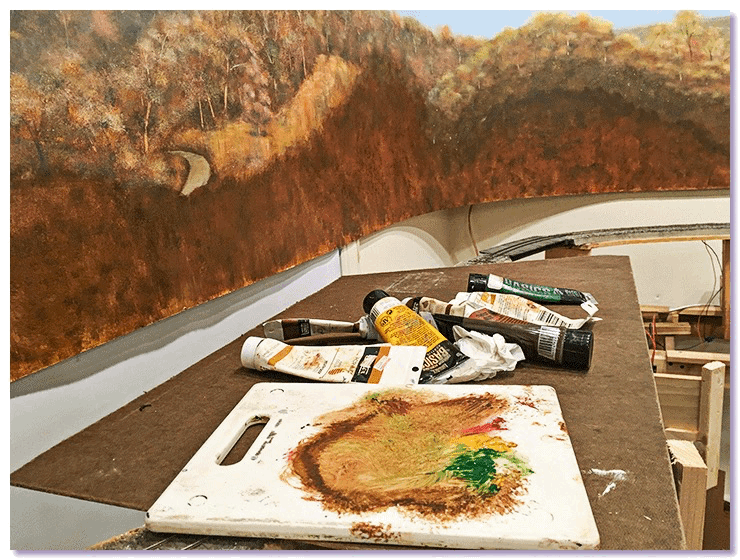
"Blocking in" the shapes and shadows of the trees, and defining the quarry. The paint is brushed on with a 1 inch wide brush. Before it starts to dry, I spray it with water, and then pat it with a sea sponge. This breaks up the brush strokes and creates a coarse textured, translucent layer of paint.

More layers of color for the trees and the quarry. Will I be able to create the illusion that the quarry extends back into the scene?
Backdrop revisions-Cove Quarry
07/10/07 17:17
The removal of the track running along the wall and under the scenery at Apex has changed my plans for the scenery in that area. Some of these changes include the backdrop.
I am now planning on loading stone on a track in the corner of the layout where I originally had planned to put a garage. There is no room to model a quarry to provide the cut stone, so I am going to try to render the quarry on the backdrop, with just a stone pile immediately adjacent to the spur actually being modelled.

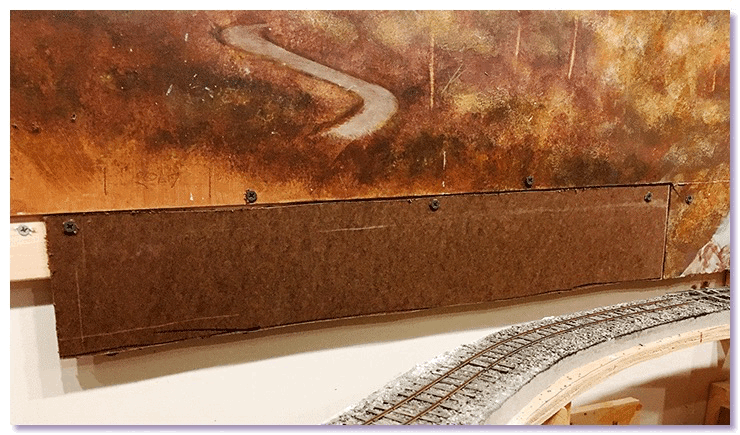
I added a strip of Masonite to the bottom of the backdrop in the corner in order to extend the rendering of Cove Quarry down closer to track level.
I then Gessoed over the part of the backdrop that will become the new Cove Quarry scene.

I sketched in an idea for the basic location of the quarry, but my initial impression is that the quarry should stay lower in the scene, and the "new hillside" needs to be extended to the left.
These backdrop revisions come at a good time, as I have to give a clinic on backdrop painting at the MER convention in a few weeks. These revisions will give me a little practice before showtime arrives.
I am now planning on loading stone on a track in the corner of the layout where I originally had planned to put a garage. There is no room to model a quarry to provide the cut stone, so I am going to try to render the quarry on the backdrop, with just a stone pile immediately adjacent to the spur actually being modelled.

I added a strip of Masonite to the bottom of the backdrop in the corner in order to extend the rendering of Cove Quarry down closer to track level.
I then Gessoed over the part of the backdrop that will become the new Cove Quarry scene.

I sketched in an idea for the basic location of the quarry, but my initial impression is that the quarry should stay lower in the scene, and the "new hillside" needs to be extended to the left.
These backdrop revisions come at a good time, as I have to give a clinic on backdrop painting at the MER convention in a few weeks. These revisions will give me a little practice before showtime arrives.
Finally Presentable
27/12/06 23:52
The entire backdrop is now at least presentable, if not complete.

In a few weeks I have to give my backdrop painting clinic at the James River Division Meet.

I am also open for the Meet's layout tour. Just a backdrop ... no layout!

I cannot count on being able to paint anything in a hurry, in front of a crowd at my clinic. Hopefully, those interested in my backdrop painting techniques will drop by to see how mine turned out.

In a few weeks I have to give my backdrop painting clinic at the James River Division Meet.

I am also open for the Meet's layout tour. Just a backdrop ... no layout!

I cannot count on being able to paint anything in a hurry, in front of a crowd at my clinic. Hopefully, those interested in my backdrop painting techniques will drop by to see how mine turned out.
East Wall Complete
23/12/06 13:19
The point where the new painting and the old painting meet on the east wall backdrop is pretty obvious to me.

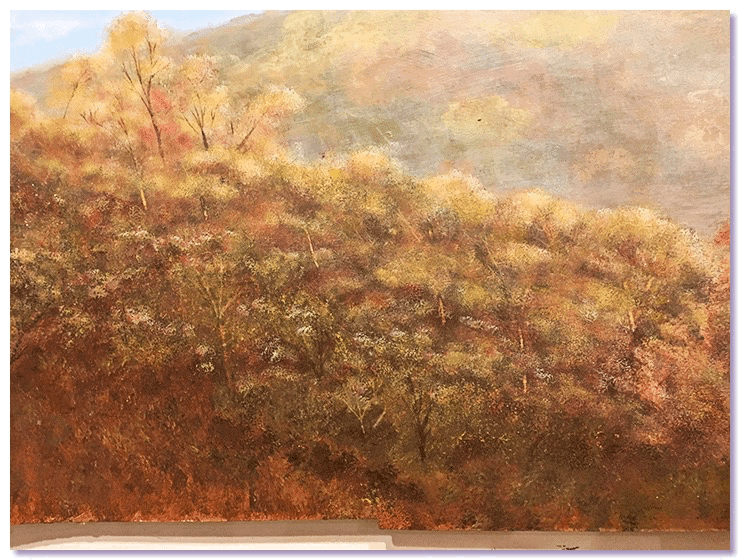
My sponge technique has become a little too regular, making the foliage look like rounded blobs of leaves. I don't think it is worth doing over, as most of it will be behind 3-D scenery.

Ariel Church has ended up with an odd shaped ridge behind it, but I like it. The bluff seems to imply the area is underlain with a rock shelf that has eroded.

A meadow stretches up the hillside from town. I am not inclined to try to render either the fence row along the woodline, or cows in the field.

Once past the cove in the corner, the hill sloping down to the road still needs a lot of work. I do not like the uniformity of the profile of the trees. A patch or two of taller trees needs to go here.

My sponge technique has become a little too regular, making the foliage look like rounded blobs of leaves. I don't think it is worth doing over, as most of it will be behind 3-D scenery.

Ariel Church has ended up with an odd shaped ridge behind it, but I like it. The bluff seems to imply the area is underlain with a rock shelf that has eroded.

A meadow stretches up the hillside from town. I am not inclined to try to render either the fence row along the woodline, or cows in the field.

Once past the cove in the corner, the hill sloping down to the road still needs a lot of work. I do not like the uniformity of the profile of the trees. A patch or two of taller trees needs to go here.